Case study · Defense manufacturing

One defense company now clears production holds in a single case.

Carric brought the four source systems into one case. Quality checks the record, chooses the action, and confirms the change across three sites.

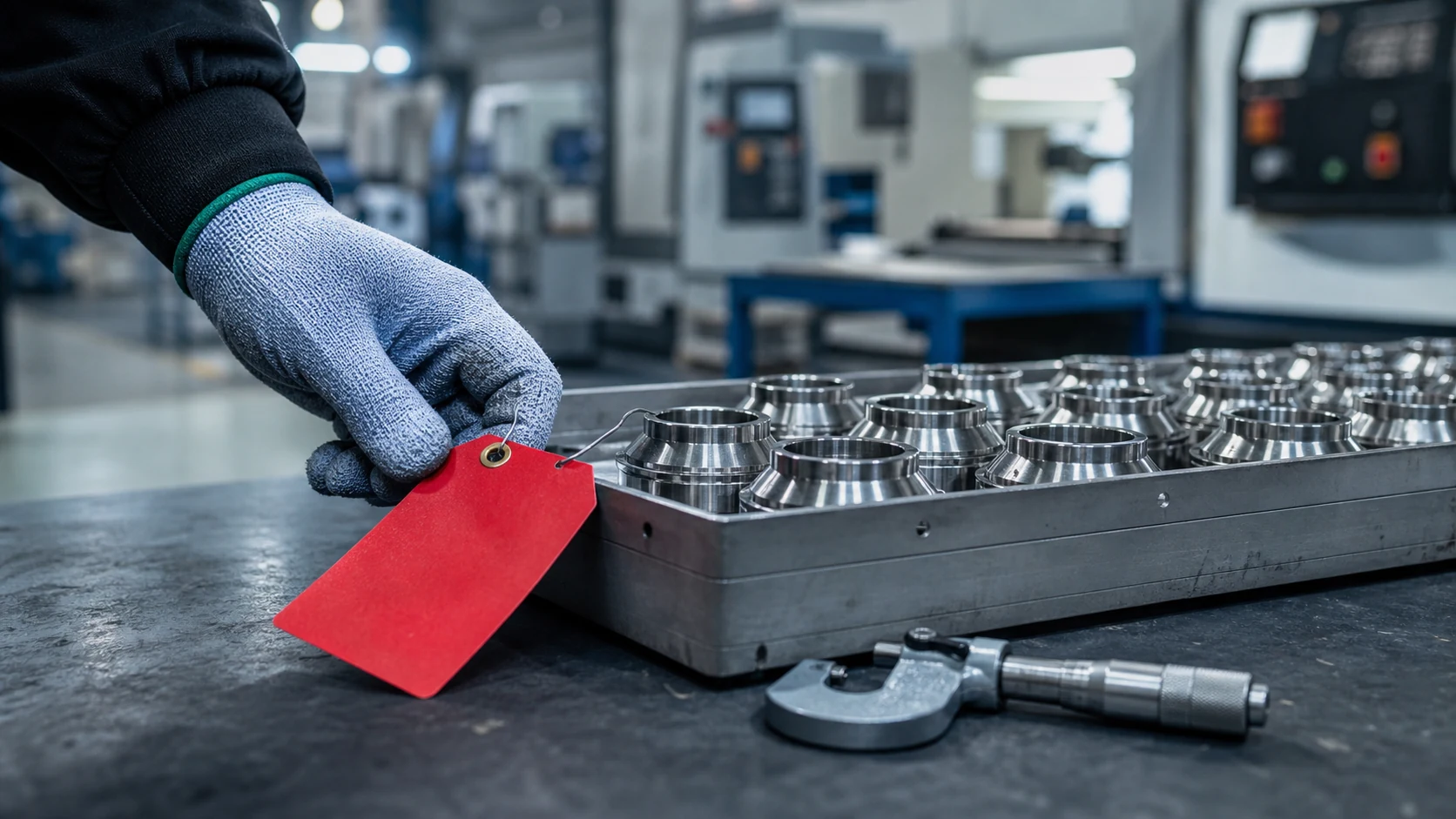
A red hold tag being applied to a tray of precision-machined components
Client
Advanced defense manufacturer
Operation
Production hold resolution
Systems
MES, PLM, QMS, and ERP
Decision owner
Quality Manager

The operating constraint

Four systems held the answer. None held the complete production-hold case.

One of our clients is an advanced manufacturer in the defense industry. It runs three production sites. MES held the work order and lot. PLM held the current traveler. QMS held the inspection and material records. ERP held the delivery date.

No system showed the full picture. Before Quality could act, the team had to find the records, choose the current revision, flag missing evidence, and rebuild the decision record by hand.

Before

Quality searched four systems and rebuilt the hold record.

  1. Hold surfaced
  2. Records searched
  3. Evidence reconciled
  4. Updates followed manually
After

One case carried the hold from signal to confirmed action.

  1. Evidence assembled
  2. Gaps made visible
  3. Quality decided
  4. MES and ERP confirmed

The working system

See what the system looks like.

Follow the same hold through two role-specific views. Production Control sees what needs attention. The Quality Manager sees the evidence and retains the decision.

01 / 02

Production Control sees which held lot needs attention next.

The queue shows the cause, owner, due time, evidence readiness, and current state.

Production Assurance queue with case priority, owner, evidence readiness, and current state

Swipe across the screen to inspect the full interface.

The new operating path

Every hold now moves through one controlled sequence.

The case opens when MES raises a hold. It closes only after the approved action reaches the production systems and both systems confirm it.

  1. 01

    MES opens the case.

    The work order, lot, hold cause, owner, and due time enter one queue.

  2. 02

    The full record comes together.

    PLM supplies the current revision. QMS adds the inspection and lot history. ERP adds the delivery date.

  3. 03

    Quality chooses the next action.

    The Quality Manager sees the gaps and chooses: release, rework, hold, or escalate.

  4. 04

    MES and ERP confirm the update.

    The case stays open until both systems confirm the change.

Human authority

Carric builds the case. The Quality Manager decides.

The case keeps the evidence, approver, time, and system replies with the lot.

What changed operationally

The production team can now resolve every hold the same way.

The result is not another dashboard. It is one controlled path from evidence to decision, action, and confirmation.

01

One current record

Quality reviews the relevant records from all four systems in one case.

02

The right person decides

Production Control runs the queue. The Quality Manager chooses what happens next.

03

Systems confirm the action

The case stays open until MES and ERP confirm the change.

Cover of the Production Hold Resolution case study and operating blueprint PDF

Downloadable case study

Download the case study and blueprint.

The six-page PDF includes the old and new process, each system's role, and both product views. It also includes a checklist to find the same pattern in your operation.

  • The operating constraint and revealing event
  • The connected path across MES, PLM, QMS, and ERP
  • Questions to assess a similar operation

The case study remains open. By continuing, you agree that Carric may contact you about this operating pattern. Privacy policy.

A similar operating pattern

Which recurring event still makes your team rebuild the record before one person can act?

Bring the event, the people who resolve it, and the systems they search. Carric will help determine whether it is the right starting point.

Book a 30-minute fit call No formal brief is required.